

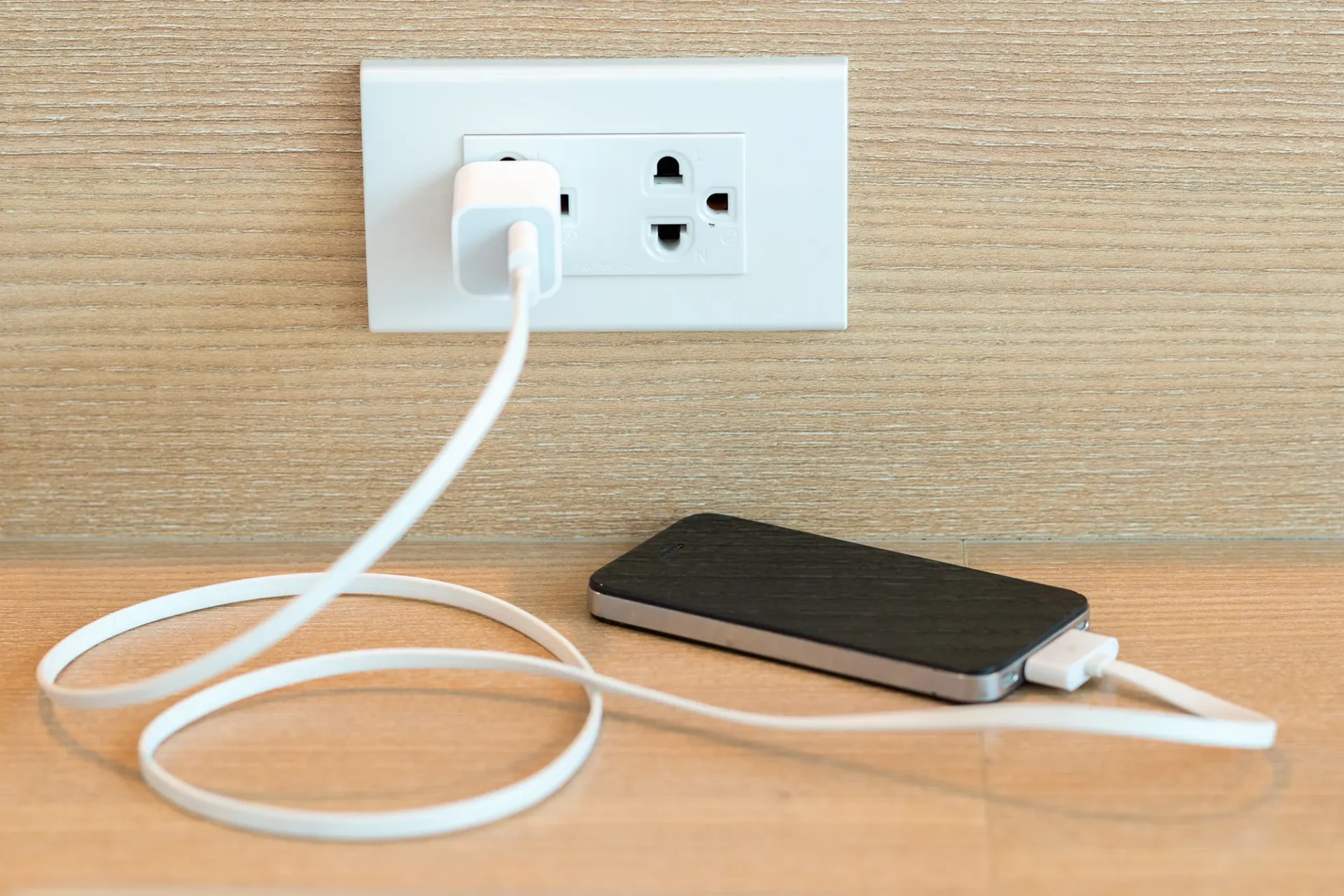
For many people, starting the day with a fully charged phone feels reassuring. Seeing the battery at 100% gives the impression that the device is ready to handle hours of use without interruption.
However, the lithium-ion batteries used in almost all modern smartphones tend to perform better when they are not kept at maximum charge for extended periods.
Charging a phone to 100% is not dangerous. But doing it consistently can gradually accelerate the natural wear of the battery and reduce its long-term capacity.
How smartphone batteries work
Most modern mobile devices rely on lithium-ion batteries, which are designed to last for a specific number of charging cycles. A charging cycle represents the total amount of energy used that equals one full battery charge.
When a battery spends long periods at the extremes—very close to 0% or 100%—its chemical components experience greater stress. For this reason, many technology experts recommend keeping battery levels within a more moderate range.
The “ideal” charging range
Battery specialists generally suggest that the most battery-friendly charging range lies roughly between 20% and 80%.
Within this range, batteries operate more efficiently and degrade more slowly over time. This is one reason why some smartphones from companies such as Apple and Samsung now include features that automatically limit charging to around 80% when the device remains plugged in for long periods.
What happens when you charge overnight
Another common habit is leaving phones plugged in overnight. Modern smartphones include protection systems that stop charging once the battery reaches 100%, preventing overcharging.
However, when the battery level drops slightly below full charge, the device may briefly recharge again to return to 100%. These small and repeated charging cycles—if they occur every night for long periods—can gradually affect battery longevity.
Simple habits that can help
There is no need to drastically change how we use our phones. A few simple habits can help preserve battery health: avoid letting the battery frequently drop to 0%, try not to charge it to 100% every time if it’s not necessary, and use the device’s original charger whenever possible.
It is also advisable to avoid charging the phone when it is already very warm, since heat is one of the main factors that accelerates battery degradation.
Charging your phone to 100% is not a mistake—but it doesn’t have to be the default every time. Lithium-ion batteries generally perform best when kept within a moderate charge range, and maintaining battery levels between 20% and 80% can help extend the overall lifespan of the device.