
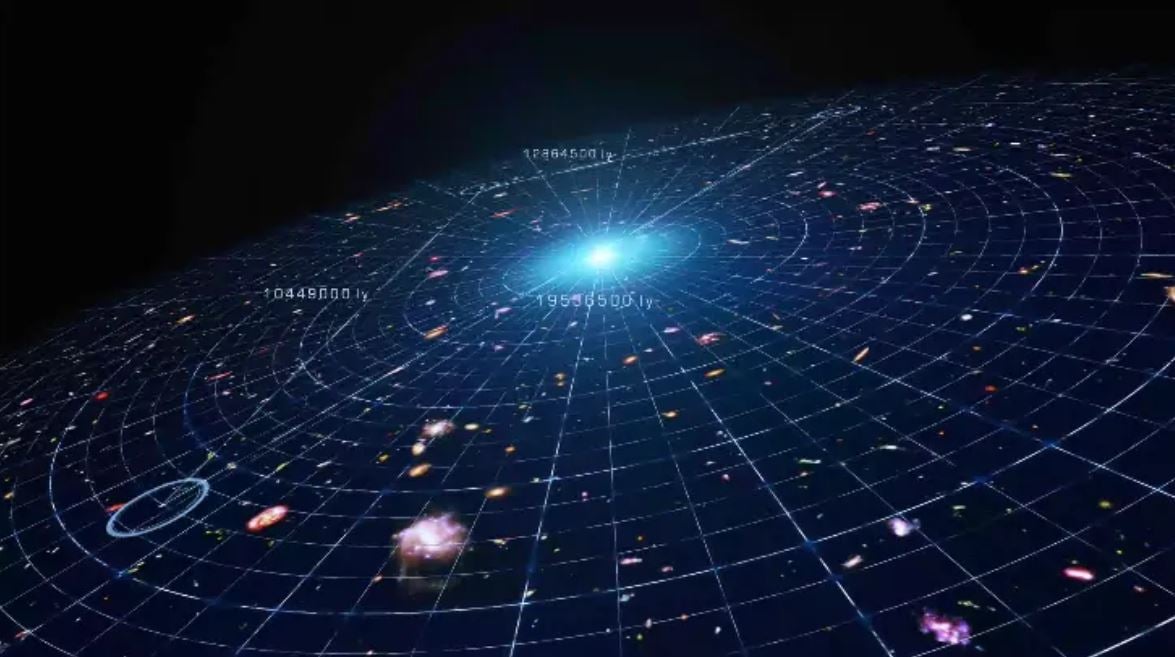
A new analysis of Type Ia supernova observations has reaffirmed one of modern cosmology’s most widely accepted conclusions: the Universe is continuing to expand at an accelerating rate.
The findings challenge a 2025 study that suggested cosmic expansion was no longer speeding up, a claim that sparked debate over the nature of dark energy and the future evolution of the cosmos.
“The Universe is still accelerating. While many questions remain unanswered, we believe we are moving in the right direction toward understanding how the cosmos works,” said astrophysicist Brodie Popovic of the University of Southampton, one of the lead authors of the study published in the Monthly Notices of the Royal Astronomical Society.
The research, which involved two Nobel Prize-winning scientists, analyzed two independent datasets of Type Ia supernovae. These stellar explosions serve as “cosmic beacons,” enabling astronomers to measure vast distances across the Universe because they exhibit nearly identical intrinsic brightness.
Type Ia supernovae occur when a white dwarf -the dense remnant of a low or medium mass star undergoes a catastrophic explosion. By comparing their known brightness with the light observed from Earth, scientists can accurately estimate their distance.
Such measurements are essential for reconstructing the history of cosmic expansion. Since light from distant objects takes billions of years to reach Earth, observing them effectively allows astronomers to look back in time and study the Universe’s past.
According to the prevailing cosmological model, the Universe was born approximately 13.8 billion years ago in the Big Bang and has been expanding ever since. In 1998, researchers discovered that this expansion is accelerating, attributing the phenomenon to a mysterious force known as dark energy.
Current estimates suggest that ordinary matter accounts for only about 5% of the Universe’s total content. Dark matter makes up roughly 27%, while dark energy represents nearly 68%, making it the dominant component influencing the cosmos on the largest scales.
Nobel Prize-winning astrophysicist Adam Riess, a co-author of the new study, noted that Type Ia supernovae remain the most reliable tool for tracing the expansion history of the Universe and were instrumental in the original discovery of accelerated cosmic expansion.
As for the ultimate fate of the Universe, scientists continue to consider three leading scenarios. The first, known as the “Big Freeze,” predicts that galaxies will drift farther apart until the cosmos becomes cold, dark, and largely inactive. The second, the “Big Rip,” suggests that accelerating expansion could eventually tear apart galaxies, stars, planets, and even atomic structures. The third, the “Big Crunch,” proposes that expansion could one day reverse, causing the Universe to collapse back in on itself and potentially trigger the birth of a new cosmos.