

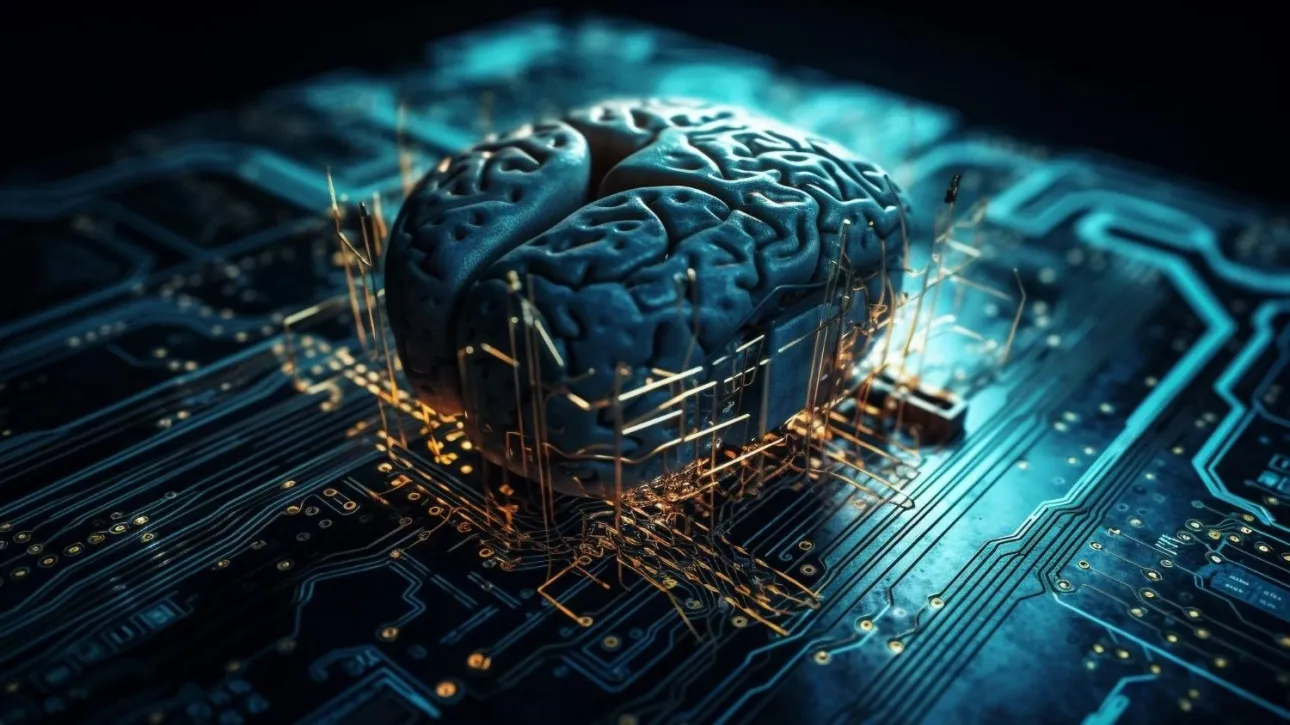
As leading artificial intelligence researchers acknowledge that current AI architectures are approaching technical and energy limitations, an alternative path is gaining visibility: using living human brain cells as computational material.
So-called “biocomputers” are still experimental. They can perform simple tasks, such as rudimentary speech recognition or learning to play basic games like Pong. Yet enthusiasm around them is growing, driven by increased AI investment, advances in brain tissue cultivation outside the body, and progress in brain–computer interfaces.
From Cell Cultures to Brain Organoids
The concept builds on decades of neuroscience research involving neurons grown on microelectrode arrays. A major breakthrough came in 2013, when scientists demonstrated that stem cells could self-organize into three-dimensional structures resembling aspects of the human brain — known as brain organoids.
Today, such organoids are widely used in biomedical and pharmaceutical research. Importantly, their neural activity remains primitive and is not associated with consciousness or higher cognition, according to current scientific consensus.
In 2022, Australian biotech company Cortical Labs drew global attention by demonstrating that lab-grown neurons could learn to play Pong within a closed-loop system. Media coverage intensified after references to “sentient” or “embodied” intelligence — terminology many researchers criticized as exaggerated.
A subsequent term, “organoid intelligence,” was proposed as a more neutral alternative, though it too remains controversial for potentially overstating the systems’ capabilities compared to modern AI.
Ethics Struggling to Keep Pace
Technological momentum is outpacing ethical regulation. Existing bioethics frameworks primarily treat organoids as biomedical research tools, not as components of hybrid computing platforms.
Swiss neurotechnology company FinalSpark already provides remote access to neural organoids for experimentation, while Cortical Labs is preparing to release its desktop biocomputer, CL1. Academic teams, including researchers at the University of California San Diego, are exploring applications ranging from neurological disease modeling to complex systems simulation.
In a world where figures like Elon Musk promote neural implants and transhumanist visions, organoid intelligence raises profound questions: How do we define intelligence? At what point — if ever — might clusters of human cells warrant moral consideration? And how should societies regulate biological systems that begin to function as microscopic processors?
The technology remains in its infancy. Yet its rapid evolution suggests that ethical and regulatory debates may become urgent far sooner than expected.