

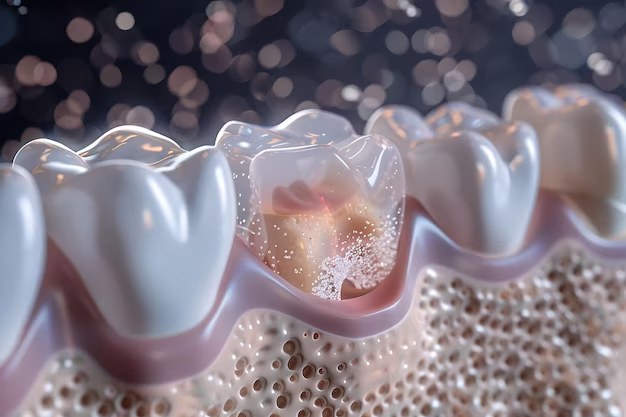
An international team of researchers has made a major breakthrough in regenerative dentistry by identifying two distinct stem cell lineages that play a crucial role in the formation of tooth roots and the surrounding supporting bone.
The discovery is considered highly significant because it could pave the way for future therapies capable of naturally regenerating teeth, potentially offering an alternative to conventional treatments such as dental implants and dentures.
Using genetically modified mice and advanced cell-tracing techniques, the scientists monitored how stem cells develop during tooth formation. Through high-resolution microscopy, fluorescent labeling, and targeted gene manipulation, the team mapped the signaling pathways that determine how these cells specialize into different tissue-forming cells.
Researchers identified a previously unknown population of mesenchymal stem cells that follows two separate developmental pathways. The first lineage is closely linked to tooth root formation and includes cells that produce the protein CXCL12. Through the Wnt signaling pathway, these cells can develop into odontoblasts, which form dentin, as well as cells responsible for producing root cementum and alveolar bone.
The second stem cell lineage was found in the dental follicle, the tissue surrounding the developing tooth. In this region, scientists discovered cells expressing the protein PTHrP, capable of differentiating into cementoblasts, periodontal ligament fibroblasts, and bone-forming osteoblasts.
According to the researchers, these developmental processes are controlled by complex molecular signaling mechanisms. In particular, suppression of the Hedgehog–Foxf signaling pathway appears to be essential for promoting the formation of alveolar bone-producing osteoblasts.
The study was led by Assistant Professor Mizuki Nagata of the Tokyo Institute of Science and Wanida Ono of the University of Texas Health Science Center, in collaboration with researchers from the University of Michigan and several other institutions.
Nagata said the findings provide a clearer mechanistic understanding of how tooth roots and supporting bone develop and could ultimately contribute to stem cell–based regenerative therapies for dental pulp, periodontal tissues, and jawbone repair.