

One of the most remarkable prehistoric predators ever identified appears to have dominated the landscapes of what is now Britain hundreds of millions of years before the first forests emerged.
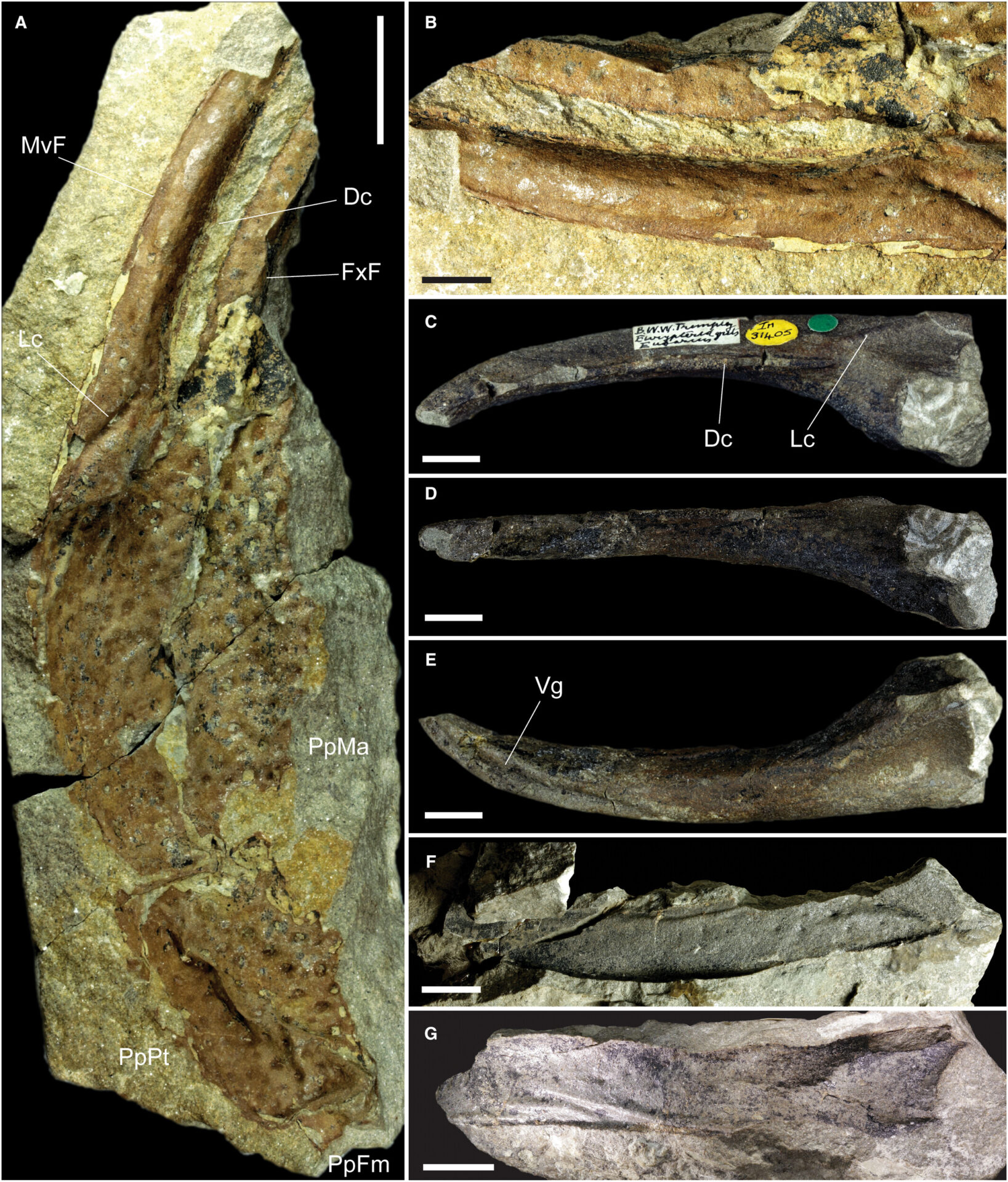
The species, known as Praearcturus gigas, is believed to have reached a length of around one meter comparable to that of an adult Labrador retriever. Equipped with powerful pincers measuring more than 16 centimetres, it likely ranked among the top predators of its time.
Researchers at the Natural History Museum in the United Kingdom announced that the animal represents the largest scorpion yet discovered in the fossil record. Its anatomy also suggests that it was well adapted to moving between aquatic environments and land.
According to Dr Richard J. Howard, curator of fossil arthropods at the museum, confirming the creature’s identity as a true scorpion reshapes scientists’ understanding of when and how giant arthropods evolved. The animal lived at least 50 million years earlier than the periods typically associated with oversized insects and other giant invertebrates.
The discovery is particularly notable because the fossils had remained in the museum’s collections for more than 150 years without being properly identified. Only through the use of modern analytical techniques and comparisons with recently described fossil species were researchers able to confirm that Praearcturus represented a distinct scorpion species.
The giant predator lived during the Early Devonian period, approximately 415 million years ago, when life on land was still in its infancy. At the time, simple plants and fungi had only begun spreading across the landscape, while complex terrestrial ecosystems such as forests had yet to develop.
Its extraordinary size is therefore especially intriguing, as it evolved long before the elevated atmospheric oxygen levels often associated with the appearance of other giant arthropods in later geological eras.
Scientists suggest that the relative absence of large competing predators may have allowed the species to attain such impressive dimensions, enabling it to dominate its environment in ways that would have been far more difficult in later periods.
Researchers also identified fin-like structures on the animal’s abdomen resembling features found in modern crustaceans such as lobsters. These characteristics provide valuable insight into a pivotal chapter in Earth’s history, when many animal groups were beginning to explore and adapt to life beyond the oceans.