

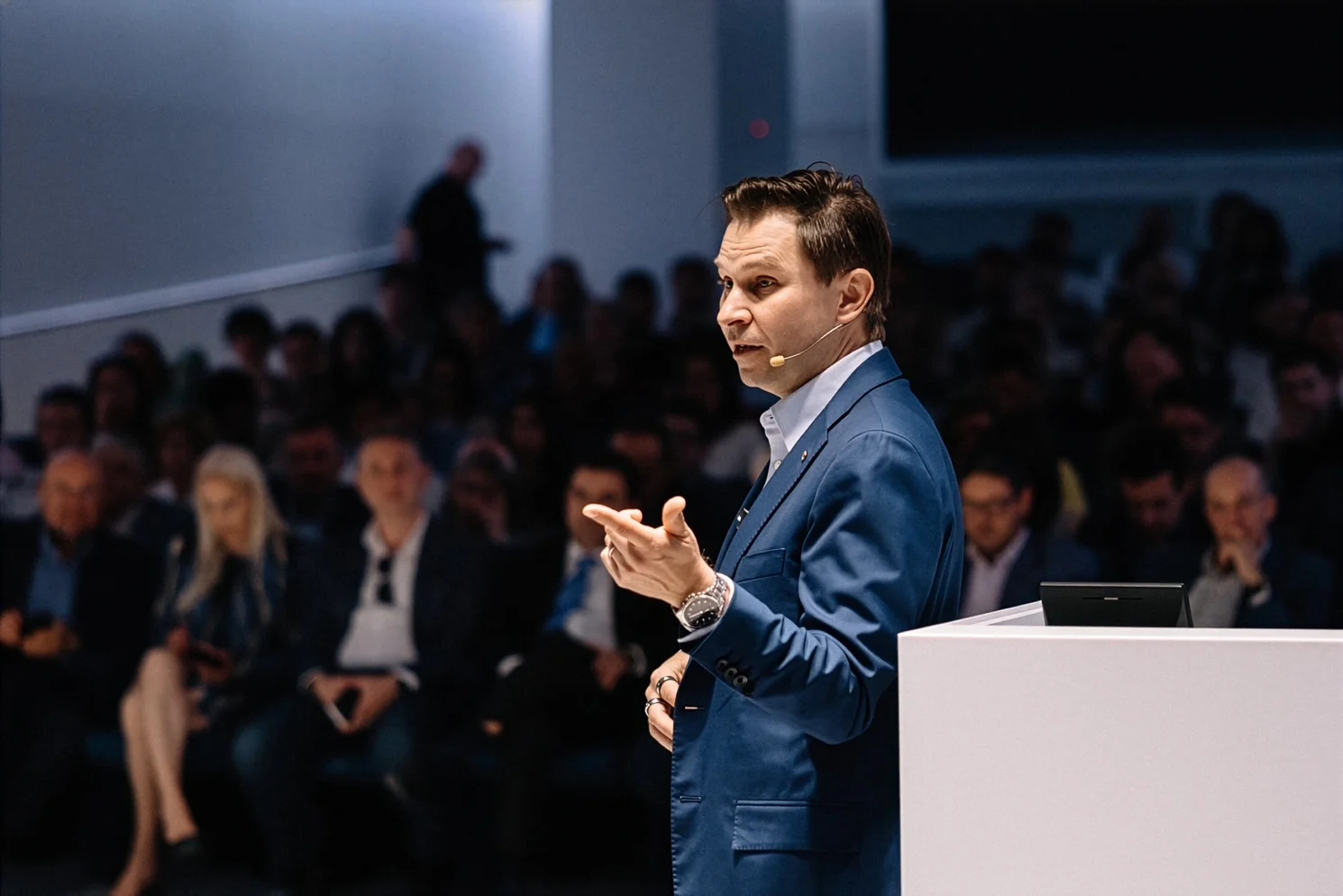
Aging is not an unavoidable biological destiny but a condition that could one day be treated medically, according to Harvard Medical School genetics professor David Sinclair, who shared his latest research during a lecture at UNIC Athens.
Speaking at the event titled “David Sinclair on Age Reversal: From Discovery to Human Trials,” Sinclair argued that aging lies at the root of most major chronic diseases, including cancer, cardiovascular disease, and Alzheimer’s disease. He suggested that treating aging as a medical condition that can be studied and potentially reversed could have a far greater impact on human health than tackling individual diseases one by one.
A central focus of his presentation was the Information Theory of Aging, which proposes that aging is driven primarily by the loss of epigenetic information the biological “software” that instructs cells on their identity and function rather than solely by damage to DNA itself.
Sinclair highlighted findings from his Harvard laboratory involving sirtuins and NAD+, as well as epigenetic reprogramming experiments using OSK, three of the four Yamanaka factors. According to the research, these experiments restored optic nerve function and vision first in mice and later in non-human primates.
From the Laboratory to Human Trials
The Harvard researcher also discussed the transition of this technology into early-stage human clinical trials through Life Biosciences. The initial focus is on eye disorders, including glaucoma and non-arteritic anterior ischemic optic neuropathy (NAION).
He revealed that the first glaucoma patient has already received the experimental therapy and that the clinical study is currently underway.
Sinclair also emphasized the transformative role of artificial intelligence in accelerating biomedical research, noting that experiments that once required decades can now be completed within a month. Looking ahead, he said similar approaches may eventually be applied to liver diseases, neurodegenerative disorders such as ALS, and memory loss.
Despite the ambitious nature of his research, Sinclair stressed that his goal is not immortality but extending healthy lifespan. “There is no law of biology that says we must grow old,” he concluded.