

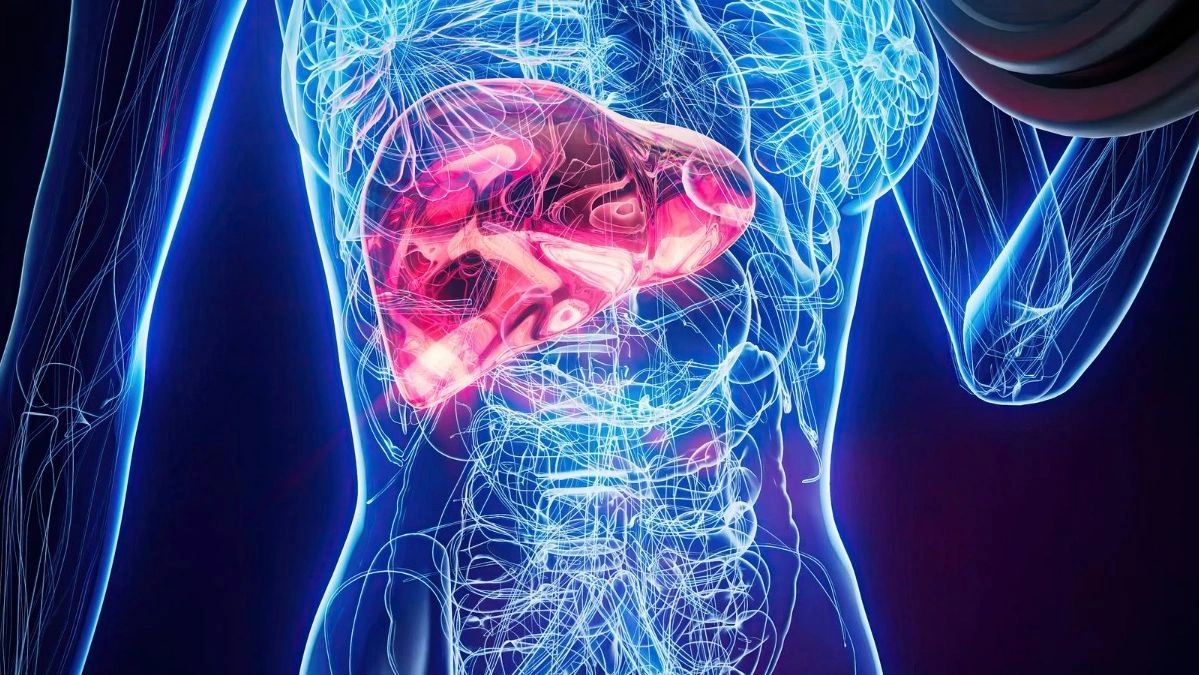
If scientists could explore the human body from within, as depicted in the film Fantastic Voyage, the liver would undoubtedly be a primary destination. As the body’s largest internal organ, it plays a central role in metabolism and detoxification.
A new study published in Nature by researchers from the Weizmann Institute of Science, Sheba Medical Center, and Mayo Clinic presents the first high-resolution genetic atlas of the healthy human liver.
A more complex organ than previously thought
The liver is composed of microscopic hexagonal units known as lobules, each responsible for over 500 functions simultaneously. While scientists have long known that liver cells divide tasks based on location, the full extent of this organization had remained unclear.
The new atlas reveals a far more intricate structure, with thousands of genes expressed differently depending on cellular position.
How the atlas was created
Advances in analytical technologies allowed researchers to map gene activity alongside the precise spatial location of each cell. However, obtaining healthy human liver samples had been a major challenge.
This was overcome through living donor liver donations, made possible by the organ’s remarkable regenerative capacity. By analyzing eight such samples, scientists constructed a detailed gene expression map.
From three zones to eight
One of the most significant findings is that the liver is not divided into three zones, as previously believed, but into eight distinct functional regions, each with specialized roles.
This helps explain why certain diseases emerge in specific areas of the liver:
- Metabolic disorders tend to originate in the center of lobules
- Viral and autoimmune inflammation occurs mainly at the periphery
- Cancer and metastases show location-specific patterns
Why the human liver is more vulnerable
Compared to other mammals such as mice, pigs, and cows, the human liver shows a key difference. While most species exhibit lower activity in the center of the lobule, humans show heightened activity in this region.
This central zone is responsible for critical processes including:
- Fat synthesis
- Glucose production during fasting
- Detoxification
- Bile secretion
Notably, glucose uptake in humans primarily occurs in this central region, enhancing energy storage. However, in modern diets rich in fats and carbohydrates, this becomes a vulnerability, increasing the risk of fat accumulation and fibrosis.
Toward new treatments
Using the atlas, researchers also examined the early stages of Metabolic dysfunction-associated fatty liver disease, a condition linked to obesity and diabetes.
They found that cells initially activate protective mechanisms when accumulating fat, but these defenses are limited by mitochondrial dysfunction.
This unprecedented mapping could pave the way for targeted therapies focusing on specific genes and vulnerable regions of the liver. It may also serve as a model for mapping other organs, potentially transforming our understanding of human biology.