
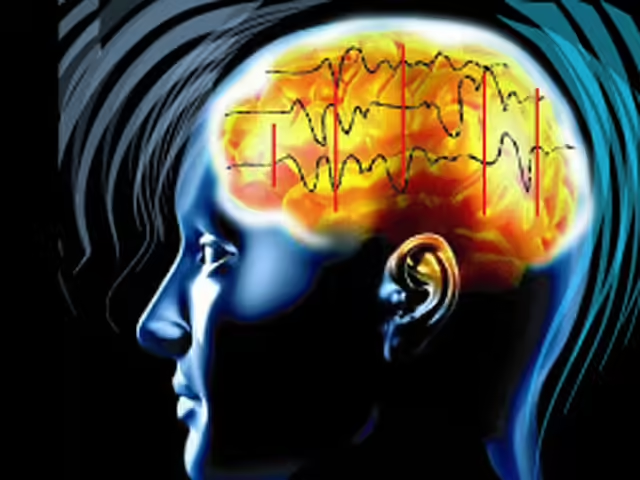
Researchers may have identified a way to temporarily reduce selfish behavior. By applying mild, non-invasive electrical stimulation to specific brain regions, they were able to increase participants’ willingness to share money with others, strengthening what they describe as the brain’s built-in capacity for altruism.
The study was conducted at the University of Zurich and involved 44 participants. Volunteers were asked to decide how to divide a sum of money between themselves and an anonymous partner. Within seconds, they had to choose whether to keep the larger share or allocate more to the other person at a personal cost.
Targeted Stimulation of Two Brain Regions
While participants made their decisions, researchers applied transcranial electrical stimulation to the frontal lobe — associated with planning and decision-making — and the parietal lobe, which plays a key role in sensory integration.
The stimulation was delivered in two frequency patterns:
- Gamma frequency (40–90 Hz)
- Alpha frequency (8–12 Hz)
When the higher gamma frequency was applied, participants were significantly more likely to choose the altruistic option, giving more money to the anonymous partner. Under the lower alpha frequency, this behavioral shift was notably weaker.
Shifting the Balance Between Self-Interest and Social Benefit
The findings, published in PLOS Biology, demonstrate that altering communication between specific brain regions can change how individuals weigh personal gain against the welfare of others.
Co-author Jie Hu of East China Normal University explained that the results reveal a distinct neural mechanism underlying social decision-making.
Christian Ruff, also a co-author from Zurich, emphasized that the team identified a specific pattern of synchronized brain activity associated with increased altruistic behavior.
Short-Term Effects – Long-Term Potential
The observed effects were temporary. However, researchers believe that repeated stimulation sessions could potentially produce longer-lasting changes, possibly contributing to therapeutic interventions aimed at improving social functioning in certain psychiatric conditions.
Ruff compared the approach to physical training: a single workout will not transform the body, but consistent sessions over time can lead to meaningful change. The same principle, he suggested, may apply to brain stimulation.