
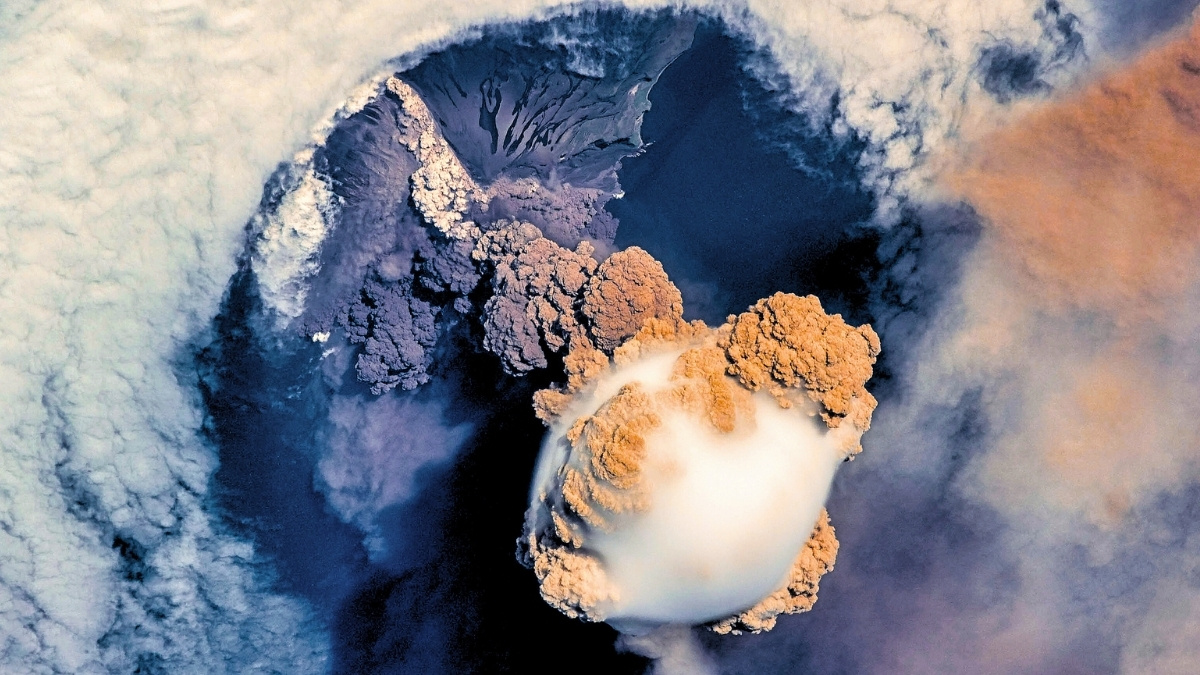
The next global volcanic disaster is more likely to come from volcanoes that appear dormant and are barely monitored than from the likes of famous volcanoes such as Etna in Sicily or Yellowstone in the US.
Often overlooked, these “hidden” volcanoes erupt more often than most people realise.
In regions like the Pacific, South America and Indonesia, an eruption from a volcano with no recorded history occurs every seven to ten years. And their effects can be unexpected and far-reaching.
One volcano has just done exactly that. In November 2025, the Hayli Gubbi volcano in Ethiopia erupted for the first time in recorded history (at least 12,000 years that we know of).
It sent ash plumes 8.5 miles into the sky, with volcanic material falling in Yemen and drifting into air space over northern India.
One volcano has just done exactly that. In November 2025, the Hayli Gubbi volcano in Ethiopia erupted for the first time in recorded history (at least 12,000 years that we know of).
It sent ash plumes 8.5 miles into the sky, with volcanic material falling in Yemen and drifting into air space over northern India.
To help address this, my colleagues and I recently launched the Global Volcano Risk Alliance, a charity that focuses on anticipatory preparedness for high-impact eruptions.
We work with scientists, policymakers and humanitarian organisations to highlight overlooked risks, strengthen monitoring capacity where it is most needed, and support communities before eruptions occur.
Acting early, rather than responding only after disaster strikes, stands the best chance of preventing the next hidden volcano from becoming a global crisis.
So why do volcanoes fail to receive attention proportionate to their risk? In part, it comes down to predictable human biases. Many people tend to assume that what has been quiet will remain quiet (normalcy bias). If a volcano has not erupted for generations, it is often instinctively considered safe.
The likelihood of an event tends to be judged by how easily examples come to mind (this mental shortcut is known as availability heuristic).
Well-known volcanoes or eruptions, such as the Icelandic ash cloud from 2010, are familiar and can feel threatening, while remote volcanoes with no recent eruptions rarely register at all.
These biases create a dangerous pattern: we only invest most heavily after a disaster has already happened (response bias). El Chichón, for instance, was only monitored after the 1982 catastrophe.
However, three-quarters of large eruptions (like El Chichón and bigger) come from volcanoes that have been quiet for at least 100 years and, as a result, receive the least attention.
Volcano preparedness needs to be proactive rather than reactive. When volcanoes are monitored, when communities know how to respond, and when communication and coordination between scientists and authorities is effective, thousands of lives can be saved.
Disasters have been averted in these ways in 1991 (at Mount Pinatubo in the Philippines), in 2019 (at Mount Merapi in Indonesia) and in 2021 (at La Soufrière on the Caribbean island of Saint Vincent).
To close these gaps, the world needs to shift attention towards undermonitored volcanoes in regions such as Latin America, south-east Asia, Africa and the Pacific – places where millions of people live close to volcanoes that have little or no historical record.
This is where the greatest risks lie, and where even modest investments in monitoring, early warning and community preparedness could save the most lives.
Leave a Reply
You must be logged in to post a comment.