

Earthquakes may do more than reshape landscapes and fracture rock — they could also play a pivotal role in forming gold deep within the Earth’s crust, according to new research.
The study, led by scientists at Monash University in Australia and published in Nature Geoscience, proposes a mechanism linking seismic activity to the creation of significant gold deposits — a geological puzzle that has long challenged traditional models.
Quartz, Pressure and Electricity
Researchers suggest that the intense stress generated during earthquakes can activate a property in quartz crystals known as piezoelectricity — the ability of certain minerals to produce an electric charge when mechanically deformed.
This electrical charge appears capable of triggering electrochemical reactions in underground fluids containing dissolved gold. As a result, gold can transition from a dissolved state into solid particles, marking the first step in deposit formation.
Laboratory Evidence
To test the theory, scientists compressed quartz crystals immersed in gold-bearing solutions. The experiments showed that the electrical energy produced through piezoelectricity was sufficient to stimulate the formation of gold nanoparticles. These microscopic particles act as initial growth seeds, allowing additional material to accumulate around them.
The team also found that existing gold particles — due to their high electrical conductivity — facilitate the attachment of new layers. Over repeated seismic cycles spanning thousands or even millions of years, small accumulations could gradually develop into larger nuggets.
In this light, earthquakes may not simply fracture and displace rocks; they could actively participate in the chemical processes that create gold deposits.
Implications for Gold Exploration
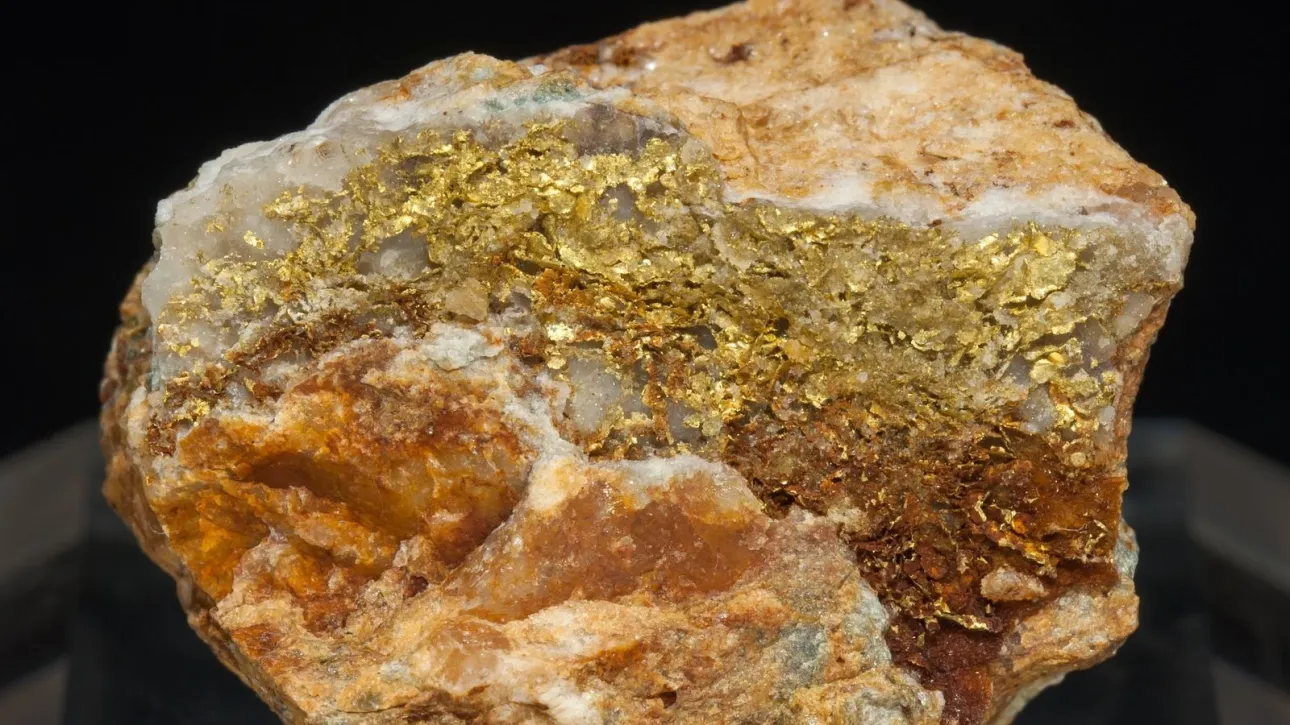
The findings offer a compelling explanation for the frequent association of gold with quartz veins, particularly in tectonically active regions. Recurrent pressure cycles caused by earthquakes may steadily concentrate gold in specific zones of the crust.
Beyond advancing scientific understanding of ore formation, the discovery could carry practical implications. A clearer grasp of this mechanism may help geologists identify promising new areas for gold exploration, refining prospecting and mining strategies worldwide.