

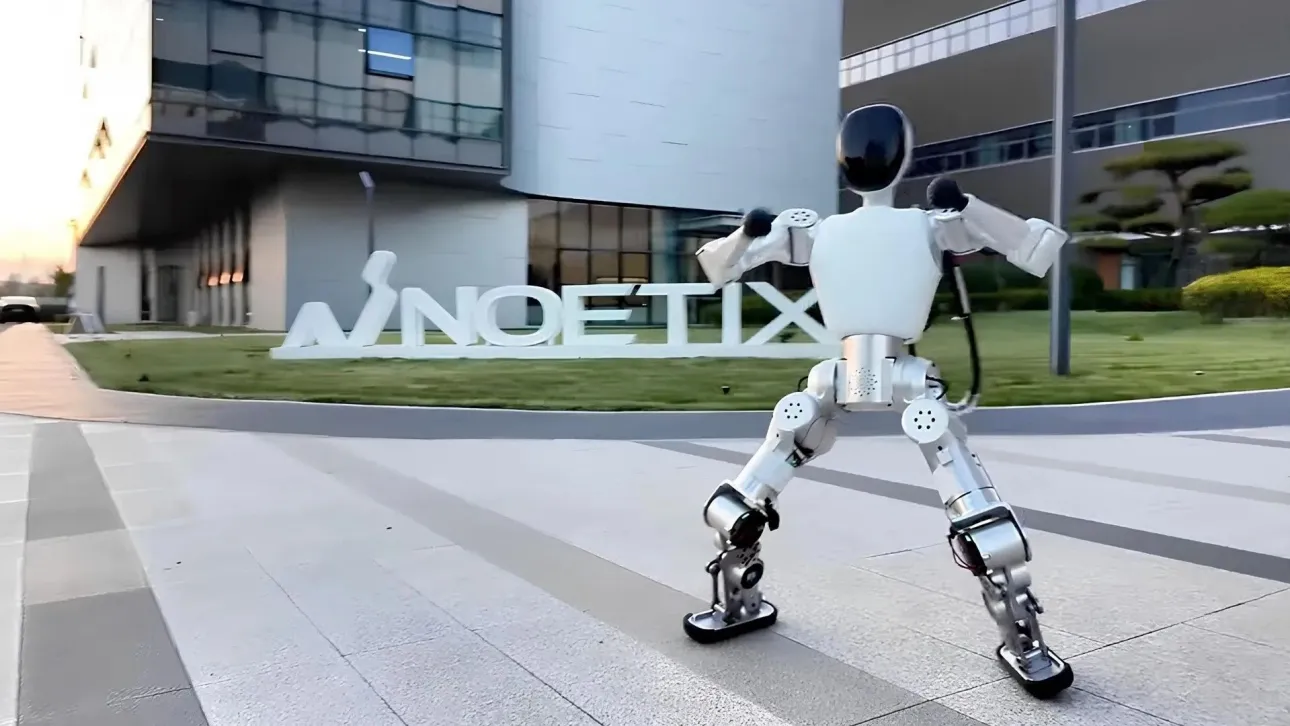
The newly established Chinese company Noetix Robotics recently unveiled Bumi, its new humanoid robot, standing 94 centimeters tall, weighing 12 kilograms, and priced the same as an… iPhone.
With a starting price of 9,998 yuan (around €1,210), equivalent to the cost of an iPhone 16 Pro Max in China, Bumi is designed to integrate into household and educational environments, offering programming, learning, and family-interaction functions, according to Inspenet.
Why is it so affordable?
One of the key factors in achieving this price point is vertical development. Instead of relying on external suppliers, Noetix designs its controllers and core components in-house, reducing costs and optimizing performance. Additionally, most parts, such as Rockchip processors and sensors, are sourced within China, supporting an efficient and tightly controlled supply chain.
Bumi is not a heavy-duty robot nor a complete home automation solution. Its role is educational and social. Its small size was a strategic choice so that it would not intimidate children and could easily fit into school classrooms and household living rooms.
The robot incorporates imitation learning and reinforcement learning to achieve smooth and balanced movements that closely resemble human gait.
Production of one thousand robots per month
To build a functional and lightweight robot, a reinforced composite structure was used at key points. This choice reduced the overall weight and allowed the use of smaller motors and lighter batteries, with a multiplying effect on total production cost. The company expects to reach a production capacity of one thousand units per month by the end of 2025. It currently operates factories in Beijing and Changzhou, with a third plant planned.
Bumi will be integrated into the Joy Inside 2.0 ecosystem, promoting its use as a platform for developers and educators. Noetix aims to cultivate a community that will expand the robot’s capabilities beyond its pre-installed functions, paving the way for educational robotics and the development of customized applications.