

Life on Earth had to begin somewhere. For scientists, that “somewhere” has a name: LUCA, from the initials of Last Universal Common Ancestor.
It was a prokaryote (a single-celled organism whose cell lacks a nucleus and other membrane-bound organelles), from which all living beings descend — from the smallest bacteria to the enormous blue whales.
Although the so-called Cambrian explosion, around 530 million years ago, triggered the emergence of complex forms of life, the history of life on Earth extends much further back in time, Popular Mechanics reports. For years, scientists estimated that LUCA (let’s call it that — it’s more practical than “Last Universal Common Ancestor”) appeared about 4 billion years ago, roughly 600 million years after the planet formed.
200 million years older
However, a new study by an international team of scientists, published in the journal Nature Ecology & Evolution, pushes this timeline even further back, to 4.2 billion years ago. At the same time, it reveals striking details about what LUCA’s life may have been like.
“Understanding LUCA is crucial for understanding the early evolution of life on Earth. Was LUCA a simple or a complex organism? What kind of environment did it live in, and when?” the study states.
To pinpoint the timing of its emergence, scientists followed a reverse approach. By comparing genes from modern species and tracking the mutations that have accumulated since the time of their common ancestor, they calculated that LUCA already existed about 400 million years after the formation of Earth. This places it in the heart of the Hadean (or Hadean Eon), the planet’s most extreme and inhospitable geological period.
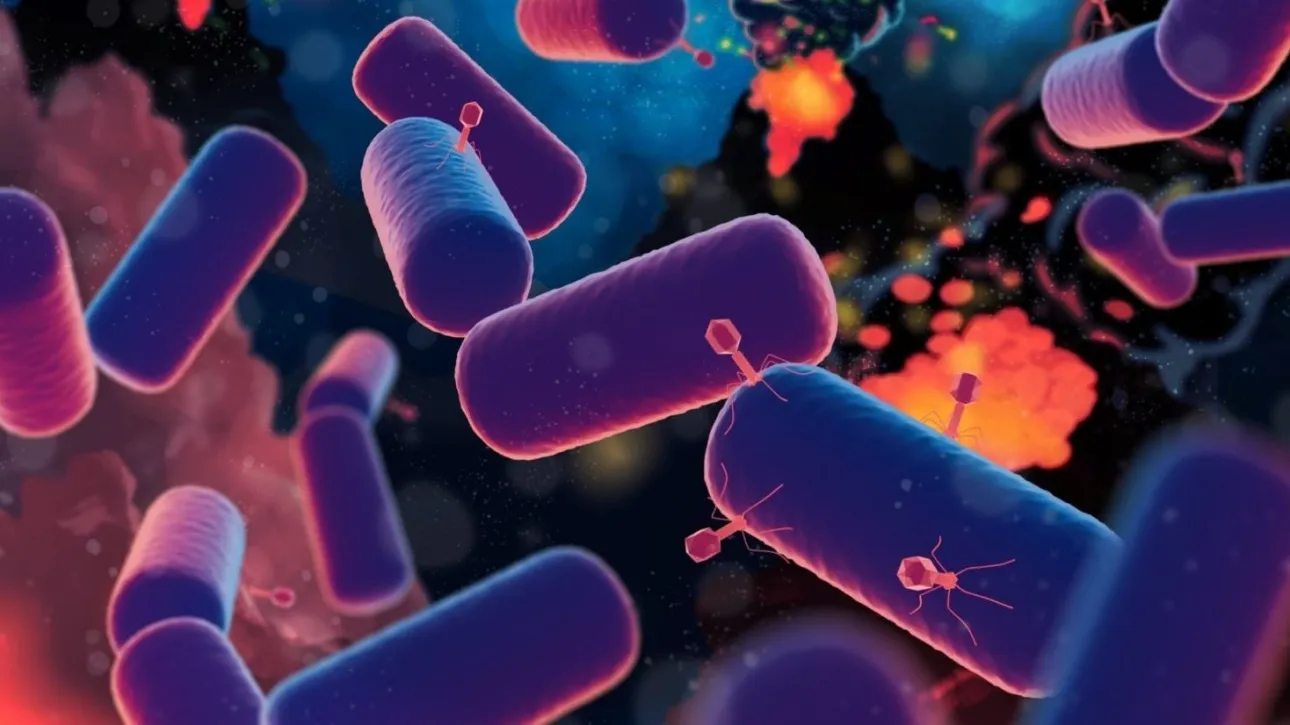
The team did not limit itself to determining LUCA’s age. By reconstructing the physiological traits of modern organisms, it concluded that although LUCA was a simple prokaryote, it likely already possessed a rudimentary immune system, suggesting that it was dealing with primitive viruses.
“It is clear that LUCA both exploited and altered its environment, but it is unlikely that it lived alone,” notes the study’s co-author Tim Lenton of the University of Exeter. “Its waste products would have served as food for other microbes, such as methanogens, which would have helped create an early recycling ecosystem.”
Although LUCA is the oldest common ancestor we know of, scientists still do not know exactly how life evolved from its very beginnings to the early microbial communities to which LUCA belonged. Future research is expected to delve deeper into this primordial history and reveal precisely how we — and every living organism — came into being.