

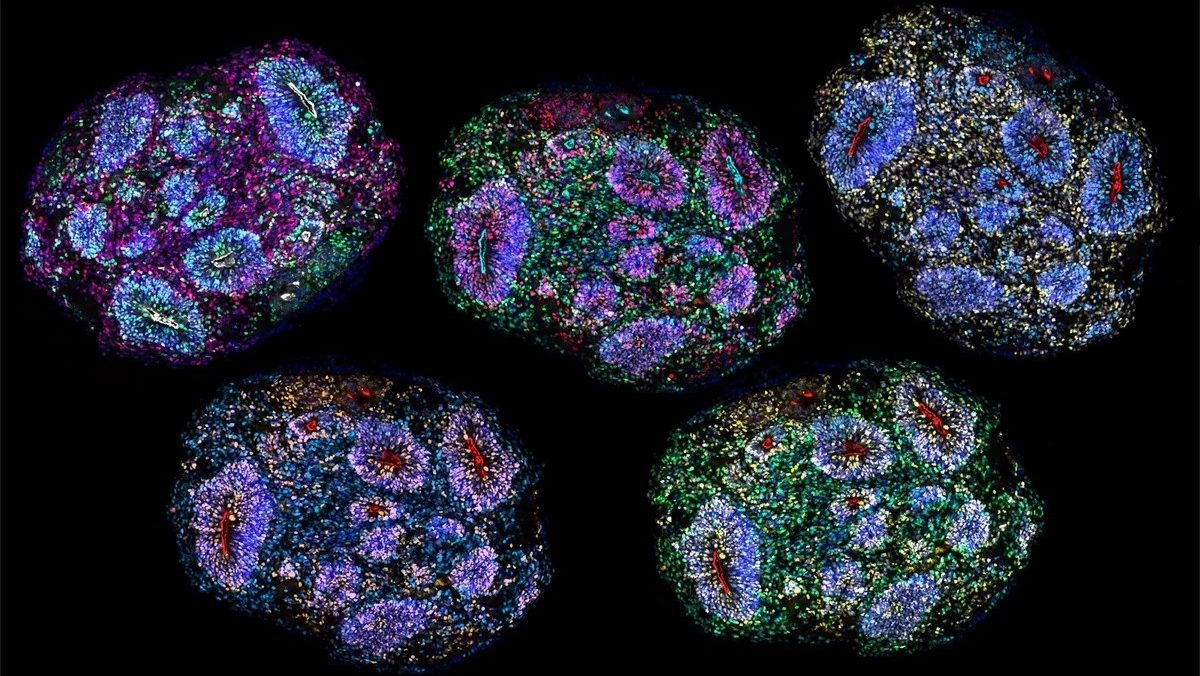
Researchers at Harvard University have achieved a major breakthrough in the study of the human brain by keeping human brain organoids alive in laboratory culture for five years a duration far beyond what had previously been possible.
These so-called “mini-brains” are not miniature versions of an actual human brain. Instead, they are three-dimensional cellular structures that reproduce several key features of the brain, including different cell types, patterns of gene expression and aspects of its developmental organization.
The ability to maintain them for such an extended period gives scientists a powerful model for investigating how one of the most complex organs in the human body develops, functions and is affected by disease.
Overcoming a major challenge in brain research
The achievement is particularly significant because the human brain remains extremely difficult to study directly. Its enormous complexity, combined with the biological differences between humans and other species, limits how much researchers can learn from animal models alone.
Until now, brain organoids have mainly been able to reproduce early developmental stages corresponding to the first months of human embryonic development. Maintaining them beyond that point has proved challenging.
Neurons, in particular, are highly vulnerable and can begin to deteriorate before the organoids reach more advanced stages of maturation.
The new technique appears to overcome much of this limitation. Researchers not only extended the lifespan of the organoids dramatically but also accelerated the production of specific types of neural cells.
In one notable example, they were able to generate a particular type of neuron in approximately two weeks—a process that would normally take months under natural developmental conditions.
New opportunities for neuroscience
Keeping brain organoids alive for years could significantly expand the ways scientists study both normal brain development and neurological disease.
Researchers can now examine cellular and molecular changes over much longer periods, providing a more detailed view of the processes involved in the development of the human nervous system.
This is particularly important because some neurological disorders may originate from very early cellular or molecular changes, long before symptoms become apparent.
The ability to rapidly produce specific types of neurons could also facilitate laboratory studies of neurodegenerative diseases and the testing of potential therapeutic approaches.
The technology is not, of course, a substitute for an actual human brain. It does, however, provide a controlled human biological model that can complement existing research methods.
More than 424,000 cells analyzed
The scale of the dataset generated during the study is another important aspect of the research, which was published in Nature.
Scientists analyzed more than 424,000 cells from 110 brain organoids, along with extensive data concerning DNA changes and aging.
This large dataset could become a valuable resource for the wider scientific community. Researchers believe it may support future investigations into brain development and aging, as well as efforts to identify the cellular mechanisms involved in neurological and neurodegenerative diseases.
The ability to keep human brain organoids alive for years therefore opens a new window into human neurobiology, allowing scientists to observe biological processes that have previously been extremely difficult to study using human cells.