
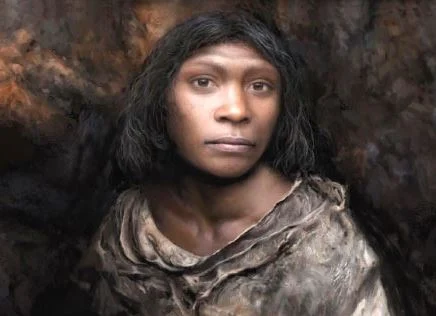
A new analysis of three skull fragments discovered at Spain’s Gran Dolina cave is offering fresh clues about one of Europe’s earliest human species. The findings suggest that Homo antecessor had cranial bones whose thickness was more comparable to that of Neanderthals and modern humans than to that of more archaic members of the human lineage.
Homo antecessor lived in Europe between roughly 1.2 million and 600,000 years ago. The species was first identified in 1994 after fossils were discovered at Gran Dolina, a cave in the Sierra de Atapuerca, about 15 kilometers east of Burgos in northern Spain. Evidence indicates that these early Europeans were roughly comparable in height to modern humans and were fully adapted to upright walking.
The evolutionary position of Homo antecessor has remained controversial since the species was first described. Initially, researchers proposed that it might represent the last common ancestor of Neanderthals and modern humans, based on a combination of relatively advanced facial features and more primitive characteristics elsewhere in the skeleton and teeth.
Later morphological and proteomic studies, however, placed Homo antecessor on an earlier branch of this evolutionary group.
“The phylogenetic position of Homo antecessor has been extensively debated since its initial description,” said Rafael Galárraga Sande of the National Research Center on Human Evolution (CENIEH) in Spain, who led the new study.
Despite its importance, the skull anatomy of the species has remained poorly documented because the fossil material recovered so far is fragmentary.
What the new fossils reveal
The researchers examined sections of the parietal bones from three adult Homo antecessor individuals recovered from layer TD6 at Gran Dolina.
Their analysis showed that the overall thickness of the cranial vault fell within the range seen in modern humans and Neanderthals. It was also clearly thinner than the cranial bone recorded in Homo erectus and other early Pleistocene hominins.
The finding is significant because unusually thick cranial bones have traditionally been regarded as a characteristic of several more archaic human relatives.
“This is the first time we have been able to quantitatively compare the thickness of the skull of this species, layer by layer, with available data from other members of the genus Homo,” Sande explained. The measurements, he added, provide valuable new evidence for understanding the evolutionary position of Homo antecessor.
Until now, only one parietal bone from the species had been studied in detail. Described in 2017, that specimen belonged to an immature individual. The three newly analyzed fragments ATD6-115, ATD6-128 and ATD6-401 come from adults, providing a more reliable basis for comparing the species with other hominins after reaching skeletal maturity.
Micro-CT reveals the internal architecture
To investigate the fossils in greater detail, the researchers used high-resolution micro-computed tomography (micro-CT). This allowed them to measure the three layers of the cranial bone separately and examine vascular channels and microscopic pores within the bone.
The diploë, the spongy middle layer of the cranial bone, was the thickest layer in all three specimens, accounting for approximately 41% to 50% of total bone thickness. This pattern resembles that observed in both Neanderthals and modern humans.
There was, however, an important distinction. Homo antecessor had a relatively thinner outer layer and a thicker inner layer compared with both Neanderthals and modern humans.
The researchers say the results reinforce the picture of Homo antecessor as a species with a “mosaic” anatomy a combination of traits reflecting different stages of human evolutionary history.
The new cranial evidence adds another piece to that complex anatomical picture. However, the researchers caution that the fossil record remains limited and fragmented, meaning that future discoveries could alter the current interpretation.
“The available sample is still limited and fragmentary, so any new fragment could refine or modify these findings,” Sande said. “We hope future excavations will uncover additional cranial remains that will allow us to test these observations and explore their evolutionary significance in greater depth.”